
Choosing the right thermostat is one of those decisions that affects your home’s comfort and energy costs every single day, yet it rarely gets the attention it deserves. In Roswell, GA, where summers consistently push temperatures into the upper 90s and the humidity along the Chattahoochee River corridor makes efficient cooling critical, the thermostat you choose plays a direct role in how well your HVAC system responds to those demands.
Our HVAC services in Roswell, GA, give us a clear picture of how thermostat selection and placement affect system performance across a wide range of home types, from the larger properties near Roswell’s Historic District to newer construction in the Willow Point and Horseshoe Bend communities. The guidance below reflects what we consistently see in the field and what actually makes a difference for homeowners navigating this decision.
Understanding the Different Types of Thermostats Available
The thermostat market has expanded considerably over the past decade, and homeowners now have three primary categories to evaluate. Each serves a different type of household and comfort priority.
Manual thermostats are the most straightforward option. They require direct adjustment whenever you want to change the temperature and offer no scheduling or automation. They tend to be the most affordable upfront, but they offer no mechanism for energy savings tied to occupancy or routine use.
Programmable thermostats allow homeowners to set temperature schedules in advance, automatically adjusting settings based on the time of day and day of the week. For households with consistent routines, this can produce meaningful energy savings without requiring daily interaction with the device.
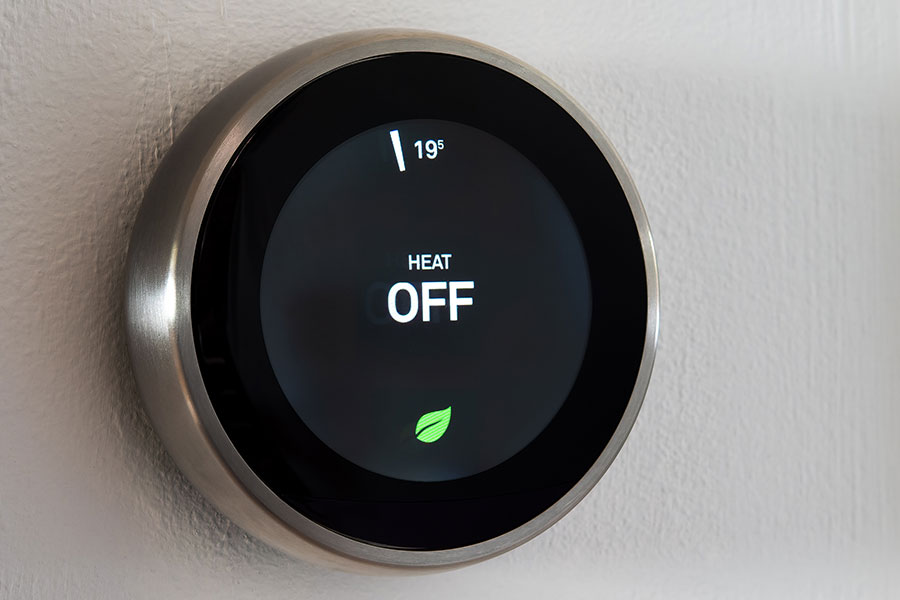
Smart thermostats go further by connecting to your home’s Wi-Fi network and offering remote control through a smartphone app. Many models also learn household patterns over time and automatically adjust to optimize efficiency. Some integrate with other smart home platforms and can respond to real-time conditions, such as outdoor temperature and energy pricing.
Regular professional HVAC maintenance works in parallel with thermostat technology. Even the most sophisticated smart thermostat cannot compensate for a system that needs service, but the two working together can meaningfully improve both comfort and efficiency.
Evaluating Your Home’s Heating and Cooling Needs
Before selecting a thermostat model, it is worth taking a clear-eyed look at what your home actually requires from its HVAC system. In our service calls throughout Roswell, we find that homeowners who approach this step thoughtfully end up with equipment that fits their situation rather than equipment that is either under-equipped or more complex than their household needs.
Several factors shape your home’s heating and cooling demands:
- Square footage and layout: Larger homes or those with multiple levels typically benefit more from zoned control or smart scheduling features
- Insulation quality: Homes with well-sealed envelopes retain conditioned air more effectively, reducing how hard the HVAC system has to work to maintain a set temperature
- Sun exposure and orientation: Rooms with significant southern or western exposure in Roswell’s sun-heavy summers can create localized heat loads that affect thermostat placement and performance
- Household occupancy patterns: Homes that are consistently occupied throughout the day have different needs than those that are empty during work hours
- Number of occupants: More people in a space generate more heat and humidity, increasing the demand placed on the cooling system
Working in homes across Roswell and the surrounding areas, we regularly see situations where a homeowner has capable HVAC equipment but a thermostat that is either poorly matched to the system or not configured to take advantage of the household’s actual routine. Getting this alignment right is one of the more straightforward ways to improve both comfort and efficiency.
Smart vs. Programmable Thermostats: Choosing the Right Features
For most Roswell homeowners who have ruled out a basic manual thermostat, the practical choice comes down to programmable versus smart. Both offer meaningful advantages over manual control, but they serve different types of users.
Programmable thermostats work best for households with predictable, consistent schedules. You set the program once, and the thermostat follows it reliably without requiring ongoing attention. Key considerations include:
- Simple to operate after initial setup
- No Wi-Fi dependency or app required
- Lower upfront cost than most smart models
- Less adaptive to schedule changes or irregular occupancy
Smart thermostats offer greater flexibility and the potential for higher long-term savings, particularly in households where schedules vary or where remote access is a priority. Relevant considerations include:
- Remote control via smartphone from anywhere
- Learning algorithms that adapt to household patterns over time
- Real-time energy usage data and reporting
- Integration with voice assistants and other smart home devices
- Higher upfront investment, with potential for meaningful long-term savings
The right answer depends on your household’s specific rhythm. A retired couple with a consistent daily routine may find a well-configured programmable thermostat entirely sufficient. A family with variable schedules and frequent travel may find that the remote access and adaptive features of a smart thermostat pay for themselves relatively quickly.
Compatibility With Your HVAC System
This is the step that homeowners most commonly overlook, and it is one of the most important. Not every thermostat is compatible with every HVAC system, and selecting a model without confirming compatibility first can result in installation problems or system malfunctions.
Key compatibility factors to verify before purchasing:
- System type: Conventional single-stage systems, multi-stage systems, heat pumps, and ductless mini splits each have different wiring and control requirements
- C-wire availability: Most smart thermostats require a common wire for continuous power. Older homes frequently lack this wire, which may require additional wiring work during installation.
- Multi-zone compatibility: Homes with zoned HVAC systems need thermostats designed to work with zone controllers
- Variable speed compatibility: High-efficiency systems with variable speed components require thermostats that can communicate with those features properly
Based on what we see in Roswell properties, particularly in older neighborhoods where original wiring may not support newer thermostat requirements, having a professional assess compatibility before purchasing a thermostat saves time and avoids the frustration of a product that cannot be installed as expected.
Installation and Professional Maintenance
Thermostat installation appears straightforward on the surface, but several factors make professional installation the more reliable option, particularly for smart thermostats or older wiring.
What professional installation addresses:
- Correct wiring connections verified against the actual HVAC system configuration
- Optimal placement to avoid false readings from heat sources, direct sunlight, or drafts
- Proper calibration to ensure the thermostat reads and maintains temperatures accurately
- System testing to confirm the thermostat communicates correctly with all HVAC modes
Ongoing maintenance for your thermostat is relatively minimal but still worth including in your regular HVAC maintenance schedule:
- Periodic dusting of the unit to prevent sensor interference
- Verification that the thermostat is level, since some sensors are affected by tilt
- Battery replacement is on schedule for models that use battery backup
- Settings review when seasonal changes or schedule adjustments make reconfiguration worthwhile
A thermostat that is installed correctly and maintained properly will deliver accurate, consistent performance and get the most out of the HVAC equipment it controls.
Keeping Your Roswell Home Comfortable Year-Round
The right thermostat does more than control temperature. It serves as the interface between your household’s comfort preferences and the HVAC equipment that delivers that comfort. In a climate like Roswell’s, where efficient cooling is necessary for several months of the year, and reliable heating is needed during colder stretches, that interface deserves careful attention.At Russell Heating & AC Repair, we help homeowners honestly evaluate their options, recommend equipment that fits their actual situation, and install it correctly the first time. If you are ready to upgrade your thermostat or want guidance on which option makes the most sense for your home and system, contact our team today and let us help you make a well-informed decision.